
Did you know Lily Allen wrote a whole LP about forced non-mono?
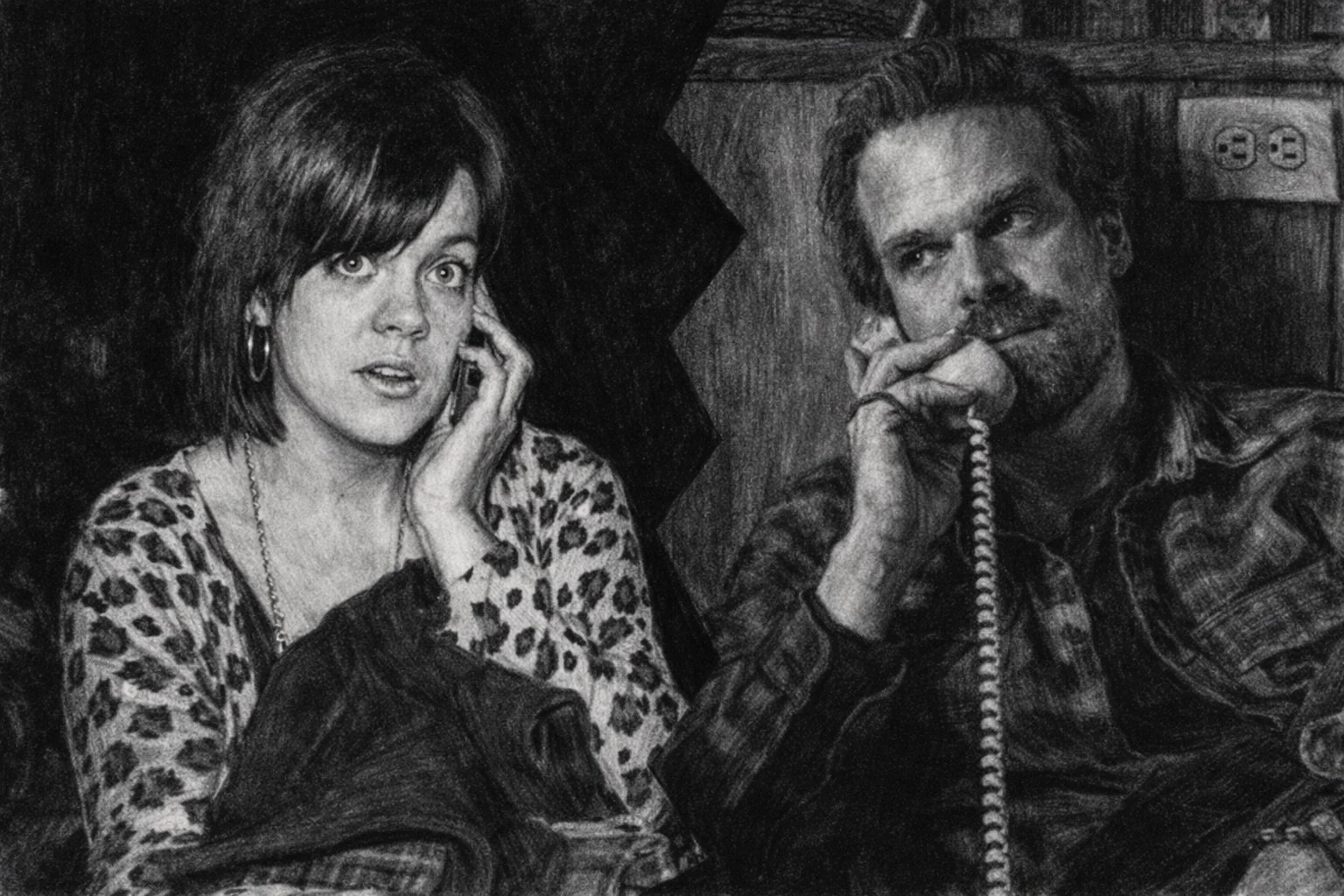
CAPTION
“I just want you to be happy, David”
I never thought I’d see another work of such ruminating as my upcoming book What I Learned From Being Discarded until I saw Lily’s 5th album drop in 2025. It seems that when there’s a pop singer break-up then we are going to be treated to a song or 2 about that, sometimes a full album. Some examples:
Taylor Swift’s catalogue is the most systematic case of autobiographical continuity in mainstream pop; it repeatedly maps onto specific partners, but the most sustained example is her relationship with Joe Alwyn in albums like Reputation (2017), Lover (2019), Folklore (2020), Evermore (2020), and parts of Midnights (2022), followed by the post-breakup material. Earlier, Jake Gyllenhaal is heavily associated with Red. This is probably the most systematic case of autobiographical continuity in mainstream pop.
Adele’s albums 19 (2008), 21 (2010), and especially 30 (2021) are anchored to long-term relationships — most notably her marriage and divorce from Simon Konecki.
Fleetwood Mac’s multiple members wrote about each other. The breakup between Stevie Nicks and Lindsey Buckingham generated a large portion of Rumours (1977) — a multi-perspective documentation of one relationship collapse.
Beyoncé’s Lemonade (2016) is a tightly integrated response to infidelity within her marriage to Jay-Z, with 4 and later work also referencing the same relationship. This is a case where one relationship anchors multiple thematic phases
A significant portion of Justified (2002) is widely interpreted as being about JT’s breakup with Britney Spears.
Justin “Bon Iver” Vernon’s album For Emma Forever Ago (2007) featured songs about his breakup with saxophonist Sara Emma Jensen.
Joni Mitchell repeatedly returned to relationship debriefs with figures like Graham Nash and James Taylor across albums such as Blue (1971) and Court and Spark (1974).
The Weeknd’s work references his relationship with Selena Gomez and especially Bella Hadid. The same relational dynamics (ambivalence, detachment, return) recur across multiple albums.
Marvin Gaye’s Here, My Dear (1978) is an unusually explicit divorce album about Anna Gordy Gaye — essentially a contractual and emotional document of one relationship ending.
Phil Collins’s solo work Face Value (1981) is tied to his divorce from Andrea Bertorelli.
Marshall “Eminem” Mathers references his mother Debbie in many songs; it’s a recurring motif across multiple phases of his career, though the tone shifts significantly over time. In his early period, references are frequent and highly antagonistic. Tracks construct a narrative of neglect, substance misuse, and grievance. Debbie functions almost as a symbolic antagonist — part personal history, part exaggerated persona-building. DM filed a defamation lawsuit over these portrayals, which reinforces how central and explicit those references were. He also mentions his ex Kim Scott multiple times in a tonal arc is similar to what we see with Debbie, but more volatile and prolonged. Early portrayals are extreme — hyperbolic, violent, performative.
If Lily Allen and David Harbour were my clients, this is how I would analyse the case.
DISCOVERY + FIRST THOUGHTS
Here’s the long and short of the relationship in Allen’s words according to West End Girl.
The opening titular track establishes their functional but lopsided relationship’s upward mobility with dependency as Harbour’s acting career especially after the success of Stranger Things and Black Widow was the driver (“you were pushing it forward”). This introduced an asymmetry in power. The move to New York and the house purchase were commitment escalators. Then Allen’s success being given theatre roles in 2:22 (2021), The Pillowman (2022), and Hedda (2023) during which Harbour told her that he is connecting with someone else but it’s going to be okay presumably as desirable, modern city-folk do that sort of stuff.
Ruminating is a description of acute attachment anxiety. The cognitive loop is classic: intrusive imagery, insomnia, demand for reassurance. Harbour’s presumptive question to Allen (“If it has to happen, babe, do you want to know?”) is pivotal — it introduces pseudo-consensual non-monogamy framed as inevitability rather than choice, personal gratification over honouring the partnership. “I don’t know.” Reflecting: “What a fucking line”.
Sleepwalking is an accusatory monologue. “You won’t love me. You won’t leave me. You don’t touch me. I don’t know if you do it intentionally… somehow you make it my fault. Course I’m angry, course I’m hurt. Looking back, it’s so absurd. I trusted you and took you at your word.” Allen speaks to the lack of romance and physicality, a sort of middle ground between the lustful honeymoon period of dating, and the blissful harmony period of partnering. “Been no romance since we wed. ‘Why aren’t we fucking, baby?’, that’s what you said. But you let me think it was me in my head and nothing to do with them girls in your bed. But somehow you make it my fault you’ve made me your Madonna I wanna be your whore.” Allen has clearly been reading or been in therapy with a counsellor who understands the psychodynamic theory behind the archetypes of a feminine partner being a saintly, maternal ‘mother of my children’ and insatiable, corruptible ‘pleasure object’ and the difficulty that less flexible/ adaptive men have of holding those 2 personas of their partner in 1 personhood. The counter to this is that women express interest in bullish, wide-armed ‘bad-boy’s or paternal, nurturing ‘father figure’s.
Tennis is another account of a reunion between Allen and Harbour. “It was how you grabbed your phone back, right out of my hands. So I read your texts and now I regret it. I can’t get my head ‘round how you’ve been playing ‘tennis’. If it was just sex I wouldn’t be jealous. You won’t play with me.” Where mystery is sexy, concealment is deceit. Allen’s experience here is one of being blindsided, and having her mind run rampant until the limits of Harbour’s infidelity are outlined. “I needed to be alone so I took myself to bed. I got a lot of information that I can’t even process. I told you what I saw and you made it all my fault. You moved the goalposts You’ve broken the rules I tried to accommodate.” The ensuing discussion was an opportunity for Allen to reassert terms and Harbour to be vulnerable and talk about desires. She explicitly recognises that she forwent her comfort to try giving Harbour what he thought he wanted. This sort of self sacrifice without reward is a setup for a very hard fall, much like I experienced with Maya whose infidelity wasn’t sexual but emotional, where she abused the rules of a partnership — rules that we didn’t talk about because I didn’t think we’d have to. They were basic relationship rules. “Who’s Madeline?” leads into the next track.
Madeline exposes that the unilateral “arrangement” had rules: novelty, discretion, containment. Harbour broke all three. The third party (Madeline) was probably not being informed as to the terms of the partnership she encountered, operating under false consent as well.
Relapse shows the cost to Allen: loss of ground, attachment panic, and risk of self-destructive coping through substance use. Allen’s self-sacrifice in moving to USA makes for a longer fall. “But the child in me protests” suggests that some intellectualisation of attachment style has occurred.
Pussy Palace and 4chan Stan shift from suspicion to evidence — descriptive rather than inquisitive. Her question “you’re a sex addict?” is an attempt to impose coherence on chaos. The same idea appears in Neil Strauss’s self-analysis in The Truth where he wonders if “since I love my partner, and have had plenty of sex, but still want sex with others, and others don’t cheat like I do, then I must be an addict”. It’s a noble question, structured around the suspicion of self-inferiority and lack of self-control but it is incorrectly posed.
Non-monogamummy is the most explicit articulation of the failed adaptation. “I don’t want to fuck with anyone else. I know that’s all you want to do. I’m so committed that I’d lose myself because I don’t want to lose you: I changed my immigration status for you to treat me like a stranger. I just want to meet your needs. And for some reason I revert to people pleasing.” Allen’s contortion into a non-monogamous identity is not as equal partner but indefinitely over-accommodator. compliance vs endorsement. The immigration reference adds coercive weight — structural dependency again. “A life with you looked good on paper. We built a palace on the perfect street. You really sold me on a dream.” Allen mourns the terms, values, and aspirations of the partnership.
Just Enough and Beg For Me move into intermittent reinforcement. He provides minimal attachment cues (“just enough hope”) to maintain the bond. She escalates bids for validation (“beg for me”), indicating erosion of self-worth and increasing protest behaviour.
Let You W/In is a bit of a rant. “I’ve become invisible, stuck here in my palace. I’m so fucking miserable in my rabbit hole. What is it you sacrifice? God knows how long you’ve been getting away with it! I will not absorb your shame. It was you who put me through this.” The first theme is of loss of identity mounting bitterness. “I can walk out with my dignity if I lay my truth on the table. Don’t tell the children. The truth would be brutal. Lie to the children: ‘the ending was mutual’. I’ll shoulder all of the pain.” Having kids adds additional weight to the process of managing a break-up: what to tell the kids to preserve their mental health and their image of their caregivers.
Fruityloop opens with understanding of of pursuant attachment which is hallmarked by a fear of abandonment. “You’re just a little boy looking for his mummy. He just wants attention. He can’t really do attachment, scared he’s gonna be abandoned.” When this fear is coupled with a fear of intimacy, a disorganised attachment occurs, where instead of an insatiable preoccupation with seeking closeness dominates, it is compelled to give way to defeatism where the sufferer opts to dump the partner instead of facing being dumped first. “And finally I see It’s not me It’s you.” Allen realises cognitively that it’s not her fault but the pain identifies his sexual patterning and attachment pathology (avoidant, unable to sustain intimacy). Simultaneously, she recognises her own pattern (“looking for a Daddy”), which suggests some movement toward insight rather than pure blame.
EVALUATION
I’d map the relational dynamics:
Initial asymmetry → dependency → lack of financial/ geographic freedom. This flipped when Allen received roles, which may have challenged Harbour’s role in the relationship and should he have a insecurity there, will have given him illegitimate means to accuse Allen of changing the terms of their relationship.
Fame → Lack of privacy. The anxiety around a relationship tear is hard enough without the constant PR optics to worry about.
Partnership terms ambiguity → new “arrangement” without shared definition. Revert and discuss the terms.
Violation → deception framed as personal growth, modernisation. Harbour needs to see that openness is actually very healing and cementing for the partnership.
Harbour’s Gaslighting-type lies → Allen’s perception destabilised. Allen needs to understand that her experience is legitimate and closer to truth than a deceiver’s.
Allen’s Hyperactivation → rumination, protest behaviour, jealousy. If exploring de-escalating from monogamy, then Allen would need to work on compersion.
Collapse, Defense, Harbour’s Blame → Allen’s identity fragmentation, coping behaviours. Harbour needs to work on accountability. Allen needs to examine self-worth and legitimacy.
From a clinical standpoint, this presentation details a failure of negotiated terms, of transparency, and of moves to repair rupture.
TREATMENT
If I were to translate this into a treatment formulation for the couple, the central approach would be:
Failure to parley — Harbour is scared of a ‘no’. But the road to non-mono isn’t a race, it’s a hike. There’s a world where you can act on your desires. There’s no world where you can start a life with someone based on love and care, and then just quit. People change. A greater evil is thinking that you won’t. A greater evil still is telling people that you wont. But the biggest evil still is letting people invest their happiness in your promise that you won’t change. The prescription for this is exercises in opening up relationships which I wrote about in another article.
New relationship energy + rupture — The nature of the non-mono adventure deviated from the guardrails Harbour suggested. I suspect that Allen was guilty of seeking information she wasn’t ready to hear, but this does pay off sometimes when the suspicion is warranted. Harbour’s unilateral redefining of how this ‘period’ would go was leading to coercive or pseudo-consensual acts and erosion of epistemic trust. Before this whole chapter, I suspect that intimacy was waning and arguments were waxing. I would deploy couple’s EFT to strip away the devil dance and encourage expression of rawer feelings of non-safety.
Horcrux syndrome — Allen eliminates part of her soul to make the relationship harder to kill. But when the relationship dies, Allen is weakened. She undergoes. identity destabilisation under relational stress. I would work on self-preservation in conversations, being okay with de-escalating ties that don’t represent you, learning everything about Harbour as a way of growing with him, and mental support whilst her lost soul part grows back after this relational blip.
But in reality they split up, so…:
For newly-single Allen I would work on how to behave when the terms of a relationship are changing: how can she slow the rate of change to a pace where her nervous system can keep up? I might also have some dating advice for her. Marrying rich and famous is fine, but we should be able to spot when people are using money and notoriety as a leverage to fulfil fantasises, family be damned.
For disgraced Harbour I would remind him that there are different types or relationships for every one especially people as socially validated as he is. Know thyself. If you want to sleep around, find someone who’s okay with that. If you want to explore romance, then we’d have to look at what’s missing in the romance you are currently exploring.
They know where to find my services. And I’d still only charge 30GBP a session whilst I haven’t received my accreditation yet as of 2026.
This album was very healing for me and my journey, mainly because I got to hear an account of how even rich and famous people are slaves to their own attachment trauma and the trappings of monogamy. It also was a revealing dive into the inner tribulations of a smart girl going through a heart-breaking experience, seeing her get stuck on the same unavoidable checkpoints of healing from a break up as I did.
