Combating the Crisis
Introducing the Ryan Minti Foundation
The Developing Mental Health Situation
This is the state of the world. Social isolation is the new emerging contagion.
I felt it myself after a year of quitting the workplace and my social circle to save money and build a new business. I could feel myself getting mentally sick. I could feel myself change. I could feel my interpersonal skills ebb away, precisely at a time when I'd need to leverage them for my new profession.
The Ryan Minti Foundation is a movement to halt this before it gets worse. We name the problem clearly, and propose a practical response in 3 pillars:

Awareness
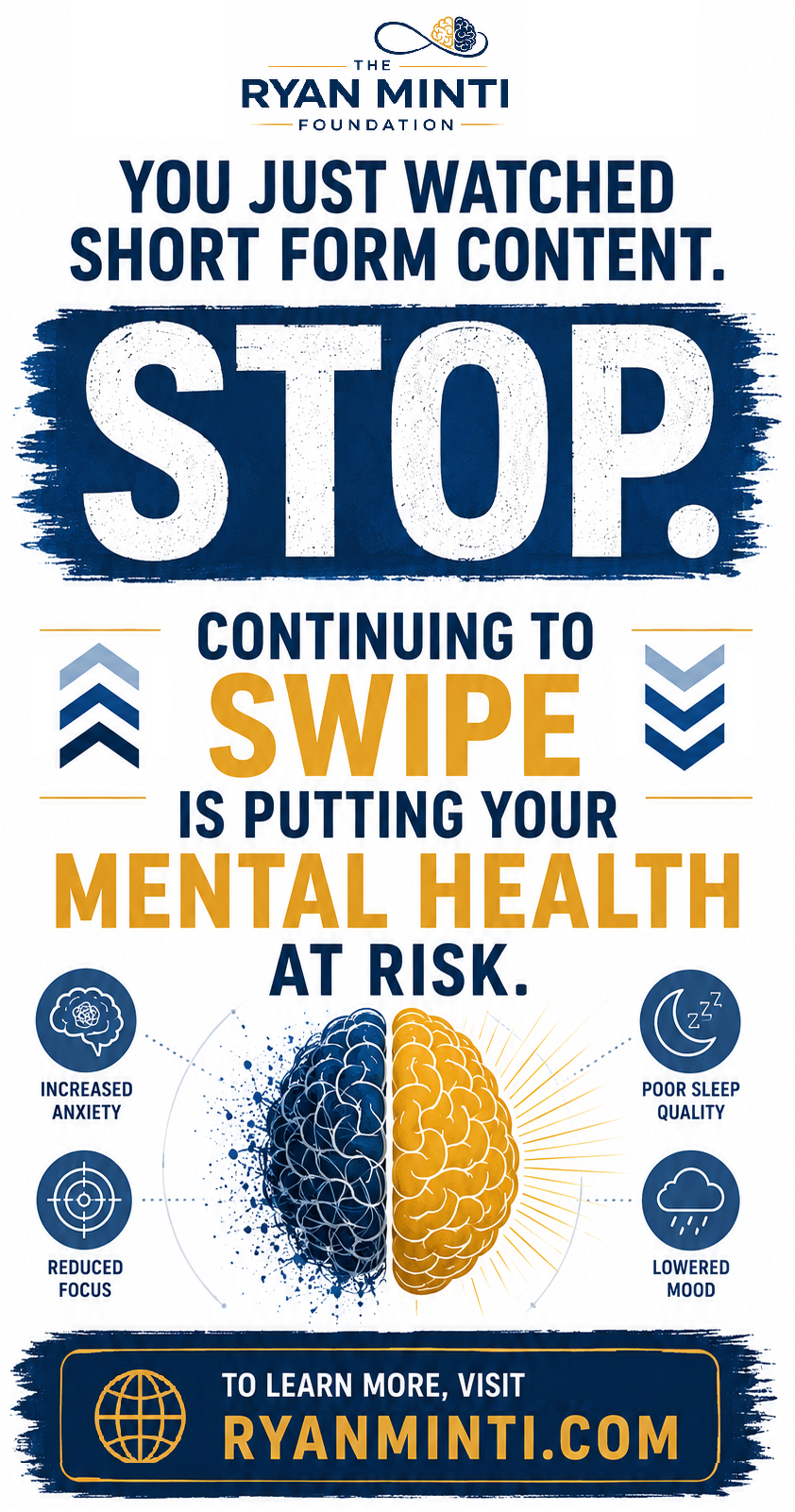
We want consumers to be aware of the mental health implications of how many UGC platforms present content. The intermittent reinforcement and short-form content have severe mental health repercussions. People have a right to know.
Controls for platforms and users
We support the implementation of controls at the platform, OS, and device levels. We also petition for legislation that enforces this.
Scheme Compliance
We want platforms to rethink their slot-machine design by giving users a healthy choice of what to consume next and stopping the upload of content that is not one consistent topic for 3+ mins.
A Movement
A call for mandatory disclosure standards on short-form content platforms
We are in the early stages of recognising a public health crisis that we haven't seen since the arrival of fast, junk food outlets such as McDonald's. Short-form video content — the sub-three-minute, next-up format that now dominates platforms including TikTok, Instagram, and YouTube — has become the most widely consumed media format in human history. It has also, the evidence increasingly suggests, become one of the most psychologically harmful. It is a recognition, grounded in a rapidly maturing body of clinical and neuroscientific research, that a specific design architecture — brief, dopaminergic, algorithmically optimised, and structurally endless — is doing measurable damage to human attention, emotional regulation, and mental health. This damage is the outcome of the design. Short of being labelled as technophobic or as failing to appreciate the genuine creativity and connection that these platforms can foster, I am fronting an effort to draw attention to and design potential policies around the liberal serving and consumption of such content. Mindless ingestion of this format is begetting more mindlessness.

The Situation
What the Research Tells Us
The neurobiological mechanism is now well-documented. Short-form video platforms trigger small doses of dopamine with each scroll, operating through variable reward schedules, the same psychological architecture that underlies slot machine addiction, something that I read a lot about in my research around push-pull cycling of avoidant-pursuant couples. Dopamine release generated by uncertainty is stronger than that generated by deterministic rewards, which explains why users find themselves caught in the loop of "just one more," even when the content in isolation is recognised as a waste of human potential, both by the creator and viewer. Platforms achieve this through autoplay, infinite scroll, and pull-to-refresh functions — design features whose purpose is to eliminate the natural pause at which a person might choose to stop.
Over time, this produces tolerance: users require more and more extreme content to achieve the same neurological response. It produces withdrawal: anxiety, restlessness, and discomfort when access is removed. These are the defining characteristics of behavioural addiction, and the evidence that short-form video use can produce them is no longer preliminary.
The cognitive consequences are correspondingly serious. Neuroimaging studies have identified disrupted connectivity in the prefrontal cortex and striatum — the networks governing executive function, self-regulation, and reward processing — in heavy short-form video users. EEG research has documented decreased activation in the dorsolateral prefrontal cortex during short-form video engagement, indicating a measurable shift toward reactive, stimulus-driven processing and away from reflective thought. A 2025 narrative review covering six years of literature concluded that heavy short-form video use is significantly associated with decreased sustained attention — the capacity to maintain focused concentration that underlies learning, professional performance, and meaningful human relationships.
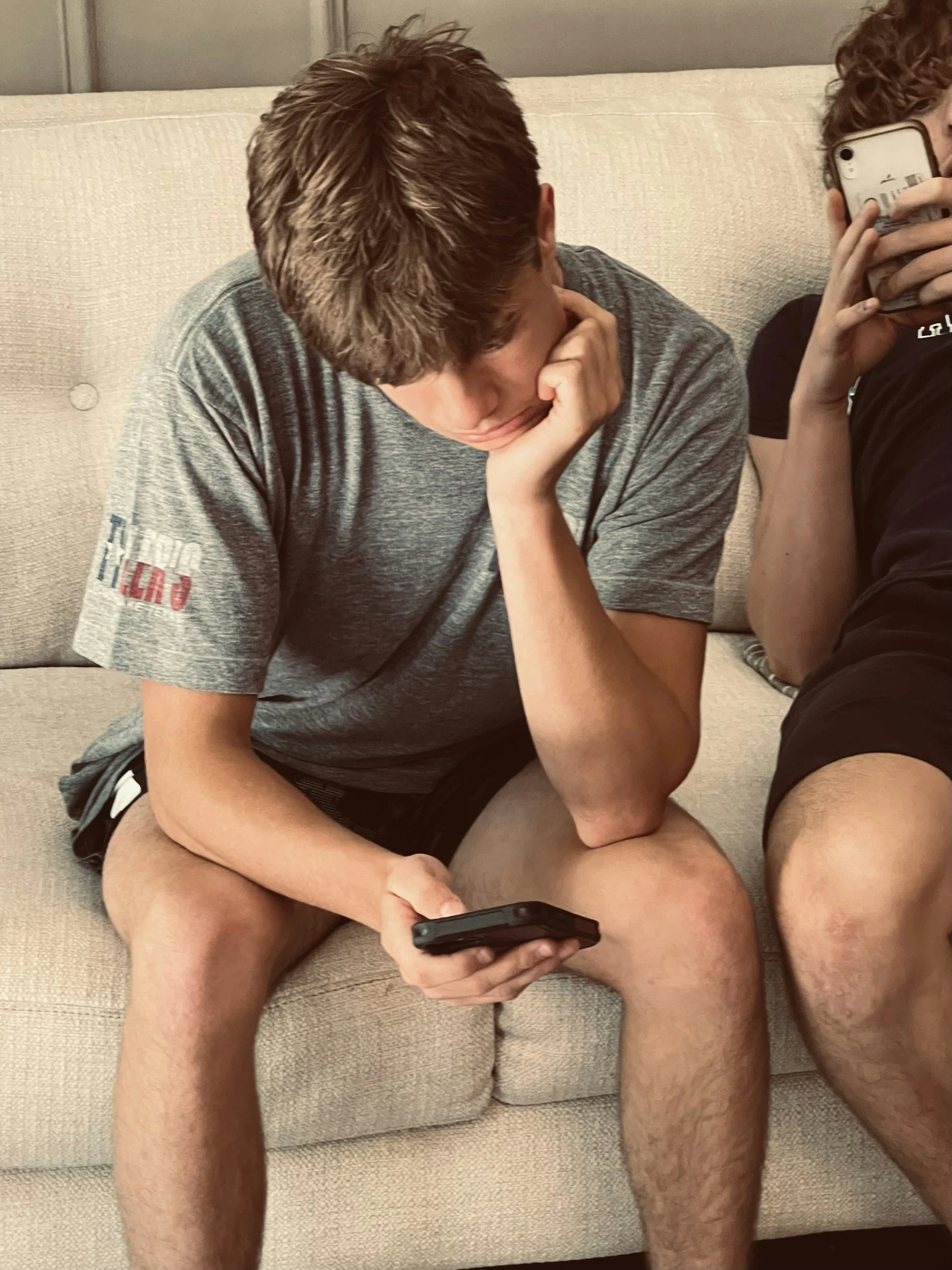
Research tracking 18 to 24-year-olds found that time spent on TikTok was significantly associated with decreased self-rated attention span, and that psychological dependence on the app produced notably worse attention scores independent of raw usage time. Studies on adolescents — whose executive attention systems and self-regulatory capacities are still in active development — found that short video use intensity was positively correlated with impaired attention control and what researchers have termed "TikTok brain": a state of heightened reward sensitivity accompanied by reduced tolerance for unstimulating tasks. In practical terms, this means difficulty sustaining focus in classrooms, in conversations, in long-form reading — the core cognitive activities through which human beings develop, relate to one another, and participate in civic life.
Besides physiology and attention deterioration measurements, the bad news is that mental health correlates are similarly robust. Research has identified moderately positive correlations between short-form video addiction and depression, anxiety, and stress. The mechanism appears to involve maladaptive coping: users turn to short-form content as a means of temporary emotional regulation, but the short-term relief generates long-term escalation of psychological discomfort. The platform becomes both the source of the distress and the primary relief from — a closed loop with no internal exit, also known in psychology as a trauma bond.
Usage figures give this research its scale. In the United States, the average time spent by US TikTok users on that platform alone rose from 34 minutes per day in 2019 to 82 minutes in 2024. Instagram users spend an average of 33 minutes per day on that platform globally, with Gen X spending 28 minutes and Gen Z spending up to 53 minutes daily. Approximately 50% of this time is spent watching Instagram Reels, according to BlankSpaces.app. The aggregate daily exposure to short-form content across such platforms, for the average young person, runs for dozens of minutes. The cumulative neurological and psychological exposure is without historical precedent.
The positive feedback loop for platforms
Non-Neutral Design
The problem is a specific set of design choices: choiceless autoplay and short-form content. The absence of natural stopping points has been understandably implemented by platform optimisation towards time-on-platform at the expense. Engagement begets revenue at the expense of user autonomy and, demonstrably, user health.
Defining where regulatory intervention is possible and proportionate: We are proposing that platforms which deploy this specific architecture should be required to disclose their effects, in the same way that tobacco companies are required to disclose the effects of their products, and food manufacturers are required to disclose nutritional content.
The Surgeon General of the United States has already called for warning labels on social media platforms, explicitly comparing them to cigarette packaging. Australia has legislated a social media ban for under-16s. The United Kingdom's Online Safety Act is in active implementation. These are early, partial, and imperfect responses to a problem that is still being politically defined. What is missing is a clear, clinically grounded standard that policymakers, platforms, and the public can use as a reference point.

What's being done so far.
Built-in and 3rd Party Safeties
YouTube, Instagram and TikTok have built-in SFC or time-limiting tools. Most operating systems have app-time-limiting tools, for self-limitation and for parents to set on their charges' devices. Meta features Teen Accounts, which automatically restrict users under 18. They are forced into a 60-minute daily use reminder. Through the Instagram Supervision Tools, parents can lock the app entirely once that daily limit is hit. Adults can also activate Sleep Mode to block access from 10 PM to 7 AM. TikTok enforces a default 60-minute daily limit for users under 18. However, teens can easily bypass it by entering their own self-created passcode. For children under 13, the app locks down, requiring a parent to enter a passcode to grant an additional 30 minutes of scrolling. Parents can gain hard remote control over these settings by linking accounts using the Family Pairing feature.
There is a robust market for dedicated, commercial parental control software that goes beyond basic OS settings. Commercial software offers cross-platform coverage (Android and iOS) and granular monitoring. Qustodio is regarded as one of the best platforms for strict screen-time management. It allows parents to set distinct internet schedules, enforce hard daily time caps, and track the child's live location. Bark.us is the premier choice for comprehensive monitoring rather than simple time blocking. Bark uses AI to scan direct messages, text messages, and social media feeds for cyberbullying, sexual content, or signs of depression, alerting parents only when a red flag is raised. Aura Parental Controls is excellent for families seeking all-in-one digital security. It blends custom app-blocking and content filtering with identity theft protection and scam privacy features. Mobicip is ideal for multi-device households. It provides clean dashboards that allow parents to instantly lock all devices for "family time," co-manage screen schedules, and filter out specific types of video content.

What the Foundation recommends
The RMF Compliance Standard
The Foundation proposes a two-track compliance framework, applicable to all content served on short-form video platforms.
Track One: Content Standard
Content that meets all of the following criteria is deemed compliant and requires no additional disclosure:
Minimum duration of 3 minutes on a coherent single subject, defined as no substantive topic change within the content itself
No algorithmic autoplay into unrelated content within ten seconds of completion
Content meeting this standard demonstrates the basic conditions for sustained, coherent engagement. It respects the viewer's attention rather than exploiting it.
Track Two: Mandatory Disclosure
Content that does not meet the Track One standard must display, prominently and at the end of the clip, a notice like the following:
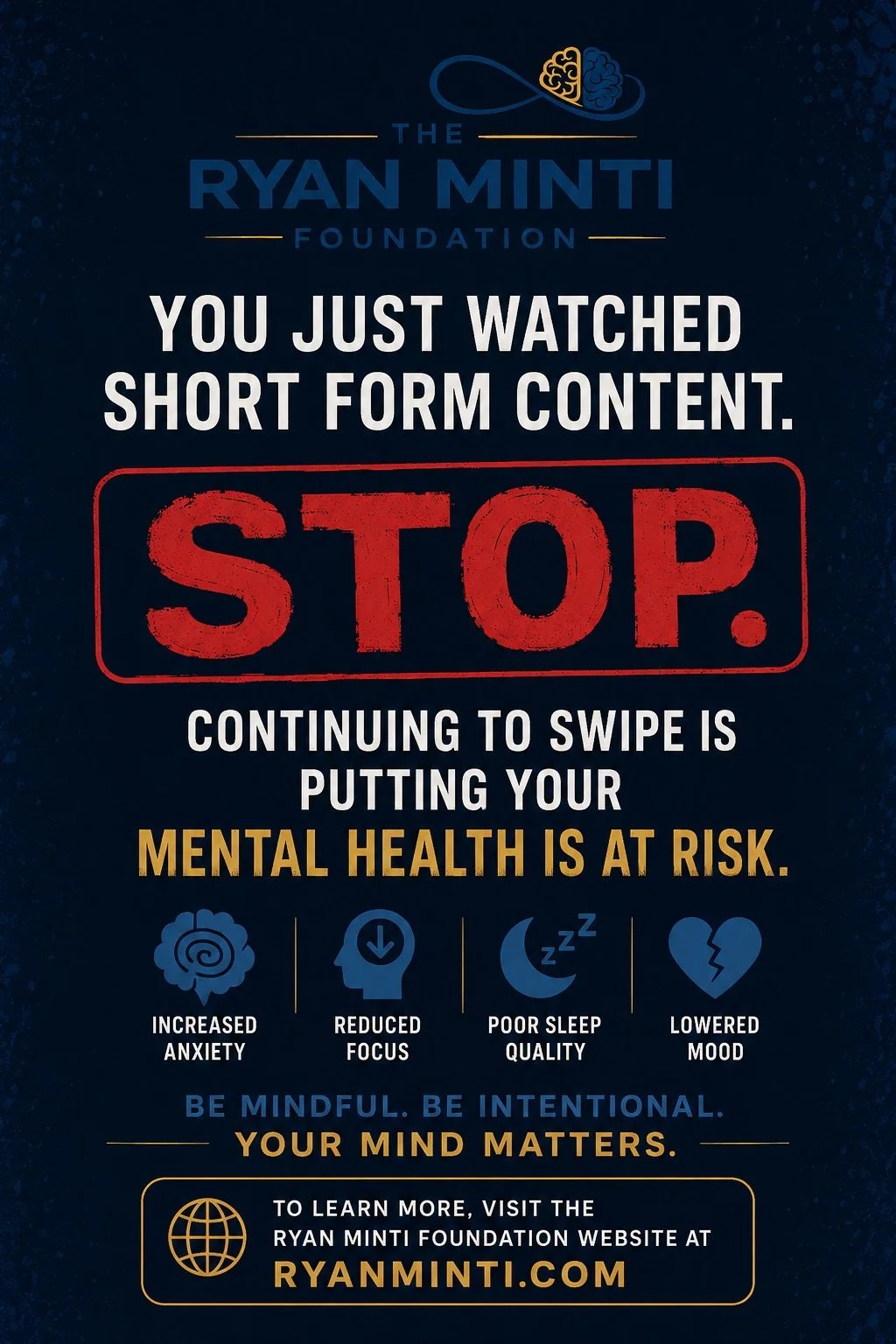
This content is under three minutes in duration. Research indicates that repeated consumption of short-form video content is associated with reduced attention span, anxiety and depression. Compulsive use patterns are consistent with behavioural addiction.
In the initial phase, the Ryan Minti Foundation will operate this standard as a voluntary kitemark — a credibility signal that responsible platforms and creators can adopt to distinguish themselves. The longer-term objective is for the standard to inform and ultimately be incorporated into regulatory frameworks, including those currently being developed by Ofcom in the United Kingdom and equivalent bodies internationally.
A step in the right direction
The damage I see
As a mental health professional, I, Ryan, bring to this initiative something that technology critics and policymakers do not: clinical proximity to the effects. I sit with people — across age groups, across socioeconomic backgrounds — who describe a relationship with their phones, and specifically with short-form video platforms, that has the texture of compulsion rather than choice. They report scrolling for hours without intending to. They report feeling worse after consuming content than before, while finding it functionally impossible to stop. They report an increasing difficulty tolerating the ordinary pauses of human life — a queue, a conversation without stimulation, a moment without their phone — that were once unremarkable. They are describing, in clinical terms, symptoms of tolerance and withdrawal.
The research validates what the consulting room already shows. And the consulting room validates what the research measures but cannot quite convey: the human cost, lived from the inside, of an attention architecture designed by engineers and monetised by platforms at the expense of the people using them.
Jonathan Haidt's work on adolescent mental health and social media, Jean Twenge's generational research, and the growing body of neuroscientific literature cited in this article have laid essential groundwork. What has been missing is a concrete, operational standard — something that moves the conversation from diagnosis to remedy.
The Minti Foundation is that remedy. It asks, as a minimum, for honesty: that the known effects of this format be disclosed to the people consuming it, and that an alternative — content that respects rather than exploits the human capacity for sustained attention — be defined and incentivised.
Once the attention of a generation is habituated to constant distraction through stimulation, the capacity for sustained thought, for deep reading, for unhurried conversation, for productivity, for tolerating the discomfort of difficulty — all are destined to ail long after the device is put away. The effects are measurable, the mechanisms understood, and the scale vast. What remains is the will to act. Please add your name to the cause
The Minti Foundation is a newly established body dedicated to the protection of human attention and the promotion of psychologically responsible content standards. This founding article represents the first statement of the Foundation's mission and the formal launch of its compliance framework. Researchers, clinicians, educators, and policymakers wishing to engage with this work are invited to make contact with ryan@ryanminti.com
Key Research Referenced
- Sharpe & Spooner (2025). Dopamine-scrolling: a modern public health challenge. SAGE Public Health.
- Head, K.R. (2025). Short-form Video Use and Sustained Attention: A Narrative Review 2019–2025. IJCESA.
- Nguyen et al. (2025). Feeds, feelings, and focus: A systematic review and meta-analysis. Psychological Bulletin, 151(9).
- Ye et al. (2025). Short video usage intensity, TikTok brain, and attention control among Chinese adolescents. Frontiers in Psychology.
- Medrxiv preprint (2025). The Impact of Short-Form Video Use on Cognitive and Mental Health Outcomes: A Systematic Review.
- Studies in Media and Communication (2025). Problematic Short-Form Video Use, Instant Gratification, and Emotional States.