
A Format for Psycho-evaluation
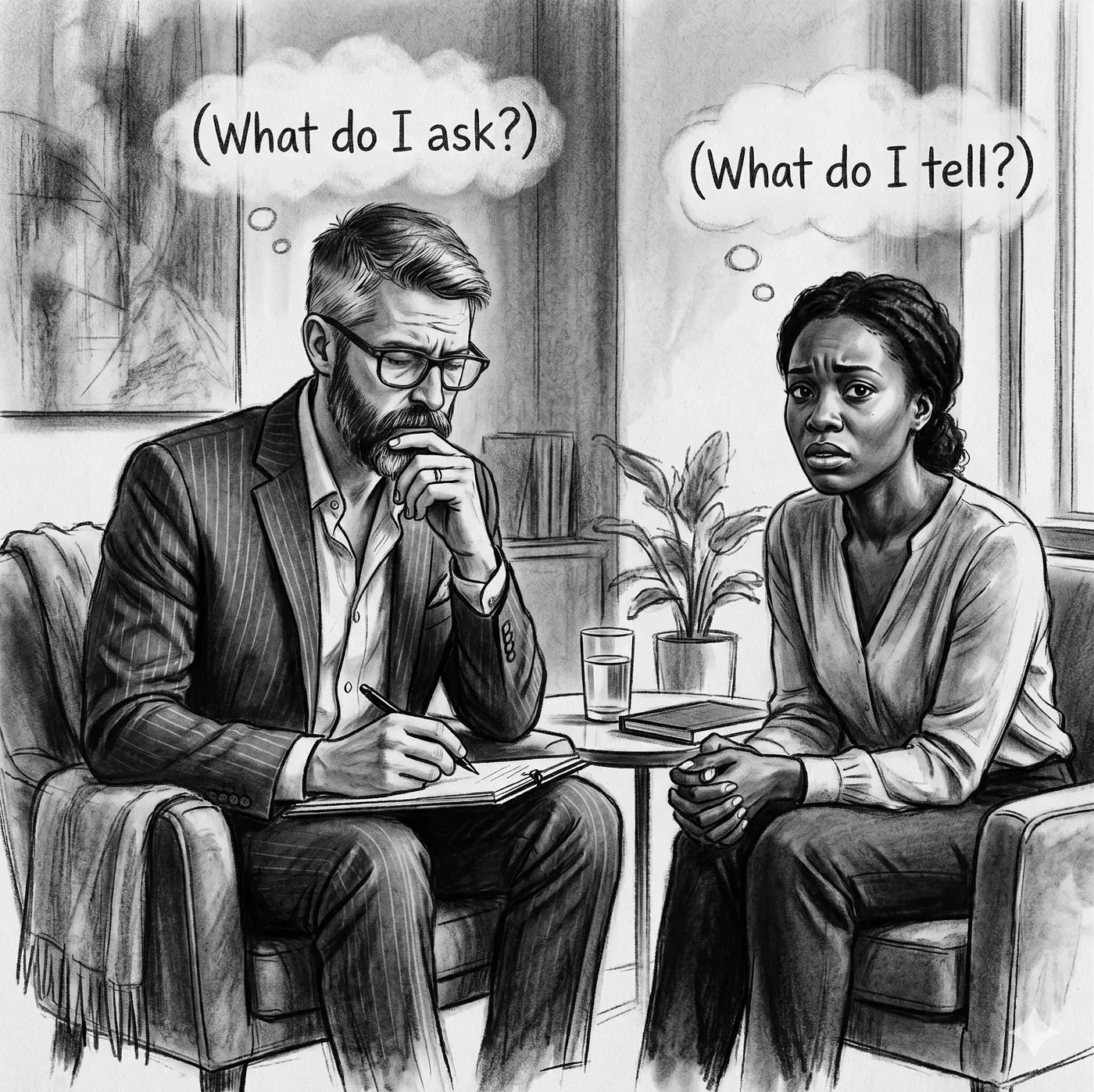
Help is at hand.
The assessment form posted by the British Columbia Medical Journal reads like a disjointed checklist for a fella who works nights to find on the kitchen counter, signed by his wife when he wakes up at 4pm.
“Done your laundry. Obsessive washing. Suicidal ideation? Diet and Exercise! BUT CHECK FOR AMENORRHEA!!! & Plz pick up kids from school at 1620. Don’t be late again. Luv u xx”
The most widely used semi-structured format is the Structured Clinical Interview for Disorders. Alternatively, the Mental Status Examination starts off with some presentational free text boxes asking the practitioner of the client:
— How old does the patient look? How healthy, fat, alert, clean, groomed, friendly, colourful?
— Does the patient have any tics, tremors, eye-contact problems, speech patterns, incongruence, dysarthria?
— Is their behaviour appropriate? Are they anxious, agitated, aggressive, defensive or distracted?
Counsellors find the mnemonic ASEPTIC helpful:
— Appearance (Behaviour)Speech
— Effect (mood)
— Perception
— Thoughts
— Insight
— Cognition
And key questions for the practitioner to assess in the first session are:
— What is the patient’s presenting complaint?
— Why has the patient presented now?
— What does the patient want?
— Is what the patient is asking reasonable?
A lot of the resources around this question of what questions should be asked of a new patient depend on whether the context is of a psychiatric or more benign counselling nature, the latter looking like:
— What brings you here today?
— Have you experienced any significant stress / trauma recently?
— Do you have any history of mental health issues/ active medication?
— How is your sleep, exercise, diet, social energy?
— What medication are you on?
— Do you have any dependancies/ substance abuse history?
…before more qualitative questions about relationships and moods are asked. But maybe there’s something to be said about having something in between these — not something that necessarily maps to the 6 pillars of wealth, health, legacy, partnerships, family, and friendships, but more strucured, searching questions of the past:
Presentation
— Who are you? (How do you describe yourself?)
— How do friends describe you?
— What do friends choose you for?
— How many people can you turn to for private issues?
Family
— How was your relationship (activities and dynamic) with each PCG before 14?
— What did your PCG teach you about love / hate?
— What did your PCG teach you about approachability / anger?
— What did your PCG teach tou about success / failure?
— What did you PCG teach you about being a man/ woman/ husband/ wife/ father/ mother?
— Would you say you had a happy (non-dysthymic) childhood overall?
— Was there any abuse/ neglect/ tragedy?
— FUTURE: What sort of PCG would you like to be?
Developmental History
— What were the big transitions and lessons learnt when passing between stages of:
— Child (family structure, relationship with PCGs, siblings, friends, school)
— Teen (friendships, college, relationships, authority, sexual discovery)
— Adult (work, finances, education, health, partnerships, friendships)?
— FUTURE: Do you think about the future a lot?
Attachment
— What relational dynamics have you noticed in your romantic relationships?
— What tends to go wrong?
— FUTURE: What are excited about in your current/ next partner?
Self-Concept
— How would you describe yourself to a stranger? Do you down / up play your self-summary
— Do you like who you are?
— What are your core personal and political values? How negotiable are they?
— FUTURE: How do you feel about your role/ position/ trajectory in life?
Emotional Regulation
— How would you describe your longterm/ mediumterm (3 days — 3 months)/ shortterm baseline mood?
— Have you ever harmed yourself or had persistent thoughts of suicide
— FUTURE: What makes you nervous these days?
Medical and Mental Health History
— Have you experienced any event or beliefs that haunted/ shamed you
— Are there memories or situations you actively avoid?
— Have you any chronic or debilitating illnesses/ injuries/ infections?
Goals
— What are you hoping to achieve (in any of the 6 pillars)?
— What steps are you taking? What’s holding you back?
— FUTURE: What would your life look like if things were going well?
