
On IPRO Analysis
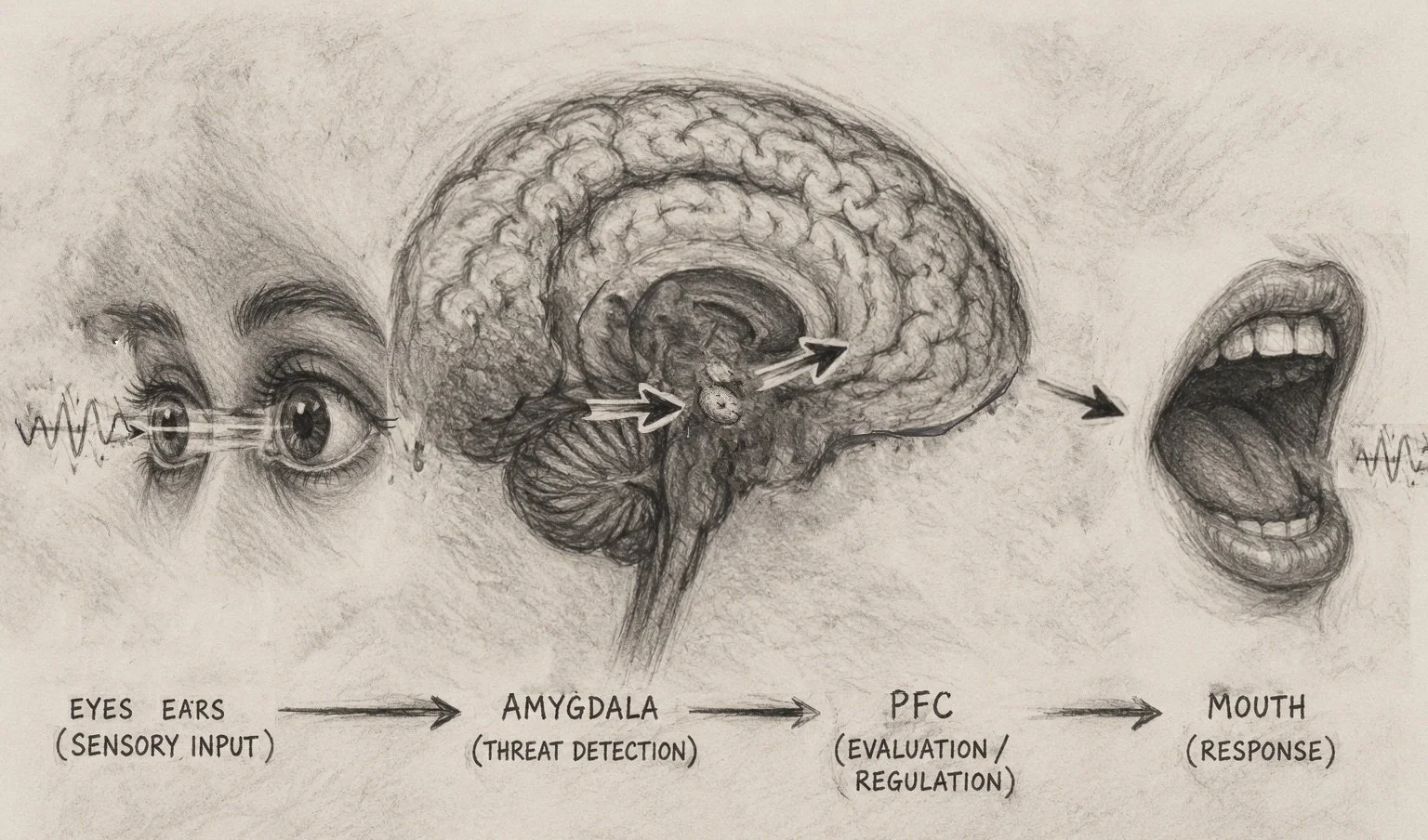
It’s like CBT on steroids.
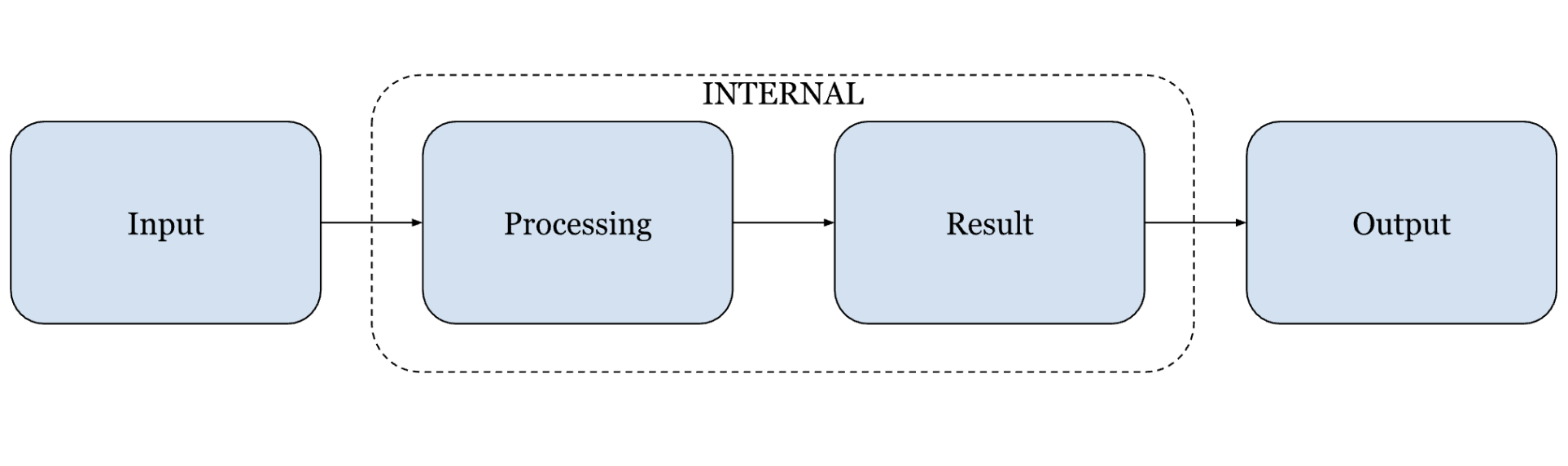
I became fascinated by how different people react to the same news in different ways, and how different people do the same actions based on different lead ups. It occurred to me that we could hold for certain variables between the receiving of news, and reacting to news, and these variables are 4-fold and map directly to fundamental metabolic steps of low-level abstraction computer science: Input, Processing, Result, Output.
In every micro and macro action we do, there are 4 distinct steps. At each node in the automatic methodology there is an opportunity to step in and override consciously for a more measured response. We can recognise and achieve mindful control of each of these steps so that the externalisations are mannered and designed to achieve what we want from situation to situation. They are the following:
Input
Our senses tell us that something is happening. The experience may be internal — hunger, anxiety, regret — or external, such as hearing a partner say something or observing a behaviour. Sensory input is not always reliable; it is partial, filtered, and prone to distortion. A central question at this stage is whether we have gathered sufficient and accurate information. This stage emphasises data gathering that is dialectical, not hallucinatory. What are the facts?
Dialectical Behaviour Therapy is particularly relevant here. DBT skills support reality-testing, emotional regulation, and perspective-taking, which is especially important for individuals with disorganised attachment or heightened emotional reactivity. Careful attention to input allows the nervous system to hold off enough for accurate processing to occur.
Processing
Once information is received, it is processed through memory, personality, attachment history, and cognitive habit. Past experiences heavily shape how we respond, often outside of conscious awareness. We must challenge preconceived beliefs and step through thoughts and feelings in a conscious way to shine a light on better ways of consuming incoming signals. Focus on how you would describe the situation. How does it make you feel? How does it compare to the past or pre-discussed expectations, or friends that have experienced the same?
This is where Cognitive Behaviour Therapy is most effective, helping clients notice assumptions, automatic thoughts, and entrenched interpretations that drive reactive or rigidified behaviour. Processing is not about suppressing emotion (that was Input), but about understanding how meaning is constructed from experience, and where that construction may be incomplete or inaccurate.
Result
Post processing, the brain generates potential courses of action. These may be reactive primary impulse or a considered secondary response. I ask patients to summarise their strategies.
Therapeutic work here focuses on interrupting habitual tactical responses. By slowing this phase down and mapping more than one route forward, a technique championed by American Professor Gerard Egan in The Skilled Helper (1975), we gain greater agency over which strategies could be deployed, rather than defaulting to familiar but unhelpful patterns.
Output
Expression is how our internal world becomes visible to others. This may be explicit, such as words or actions, or subtle, such as withdrawal, tone, or avoidance of eye contact. Relationships can only adjust to what is expressed.
The work at this stage involves evaluating the likely repercussions of their conclusions and reactions for more optimal resolution. This is difficult, but essential for relational repair and growth.
Under threat, humans tend toward fight, flight, freeze, or fawn. While all 4 responses are adaptive in survival contexts, only some are useful for evolving relationships. One of the greatest benefits of IPRO analysis is the time it takes to perform, which encourages reactors to slow down. It offers a way to slow reactivity, increase choice, and replace automatic survival responses with deliberate relational action. Your limbic system will love you.
