
On Social Shell Permeability

CAPTION
“So that’s everything about me. What about you?”
Maya said that she didn’t like sharing with me because I shared too much, too much about her with others and too much about others with her. She was correct, but she arrived at her conclusion perhaps by the wrong route. I overshare without shame, but I never did that around her. She had that takeaway because any type of sharing felt unsafe to her. She was the first to reach for the conversation cards and would tell me personal things immediately before and after that criticism. Instead of talking her down from that position, I promised I’d be better.
We occasionally meet people who are very open. They might be outrageously forthcoming about stories, opinions, and desires. They then might chastise us when we can’t join their level of unabashed exposé.
Conversely we meet people who are quite closed off. They might be shady about past and present experiences to the extent where they throttle the fun. They then might chastise us when we share more than they tend to.
Both extremes of what are known as social shell type are defective in the communication game of asking and telling. This probing and playing with safety in exposing information is something we learn early on, and sits right at the intersection of moral development, theory of mind, and socialisation into norms about loyalty and authority, because we all start out being not very secretive at all.
Toddlers make for poor confidants. They lack a fully developed theory of minds, meaning no understanding that others have different knowledge than they do. They also lack inhibitory control which would make “Don’t tell, your mother” into more of a game than a pact. Classic developmental work by British Developmental Psychologist Michael Lewis and Chinese Developmental Psychologist Kang Lee showed that around age 4, children begin to lie or conceal information. By 5–7, they can maintain secrets more consistently. There’s a well-studied link to deception and moral development, and a famous experimental paradigm is the ‘temptation resistance’ task where a child is told not to peek under a box before they are left unsupervised. Hidden cameras reveal that most peek. When asked if they peeked, many peekers deny it. Younger peekers confess more. Older ones lie more and lie for longer.
Kids learn secrecy as a social rule. Once they can keep secrets, the question becomes: when should they? Research distinguishes between Prosocial secrets (self-less) like fun surprises or protecting someone’s feelings, and Antisocial (self-ish) secrets like hiding wrongdoing or manipulation.
Children learn this distinction through adult framing and reinforcement. The child learns that warm feelings of loyalty to a person outweighs the bad feeling of deceit. Modern parenting frameworks teach that “short term secrets are like fun surprises and are okay” but “perpetual secrets don’t amount to healthy social glue.”
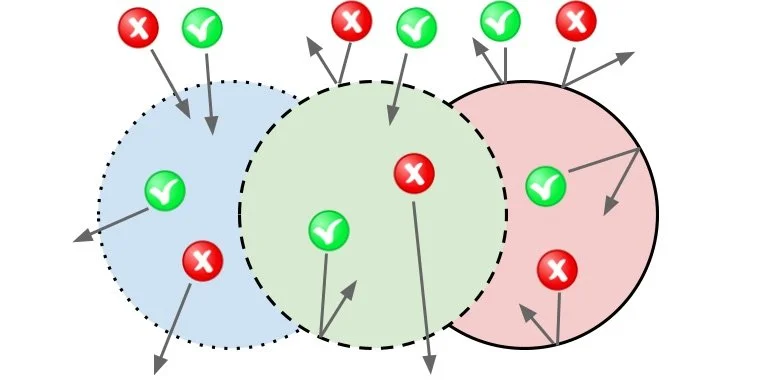
Porous, Hybrid, Rigid Social Shells
Porous social shells are epitomised by the following traits:
Difficulty saying “no”: Feeling compelled to agree to requests even when you don’t want to.
Oversharing: Revealing too much personal information too soon.
Enmeshment: Becoming overly involved in others’ problems and emotions, struggling to differentiate your feelings from theirs.
People-pleasing: Prioritising others’ needs and approval over your own.
Vulnerability to manipulation: Accepting mistreatment due to fear of abandonment.
Feeling drained: Experiencing burnout from constantly meeting others’ needs.
Rigid social shells are epitomised by the following traits:
Closed off: Unwilling to let others get close, emotionally or physically.
Inflexible rules: Resistant to new ideas or compromising.
Avoids vulnerability: Puts up walls to avoid hurt, often reacting with an automatic “no”.
Protective: Effectively shields from pain at the sacrifice of deep connection and intimacy.
Rooted in past experiences: Often develops after negative experiences like abuse.
Taking learnings from dev psyche we can trace how early experiences shape our social shell type when older. Kids that are witnesses to world-altering events and are told not to tell others tend to form insecure attachment tendencies. Avoidant patterns are more likely when emotional expression has been chronically discouraged, especially if vulnerability is threatened with punishment or at best being ignored. A child adapts their adjacent life areas by minimising need expression, and withholding inner experience.
In social shell analysis, as in many things, we must learn to calibrate. There will always be such a thing as oversharing and undersharing. Therapy and gentle, consistent practice in sharing the right thing at the right time enables us to collect data points on the way to being socially consonant and confident.
