
On Love Languages
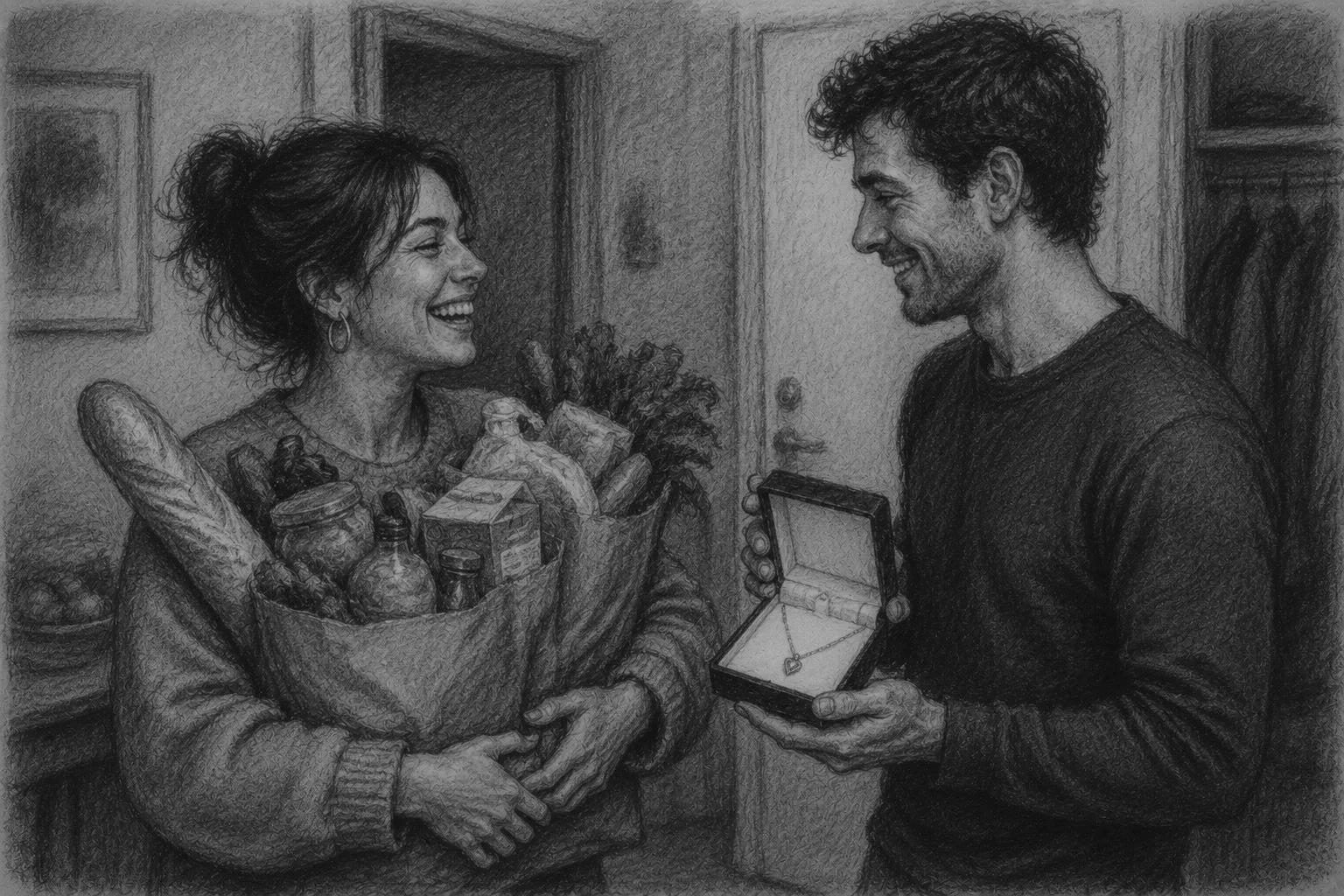
CAPTION
“You know me so well.”
I’m an acts for service guy, but I found that with Maya I was in panic mode. Trying every one of the love languages to see what would stick.
American pastor and marriage counsellor, Gary Chapman, wrote in The Five Love Languages (1992) that people tend to give and receive love through 5 categories. This can change over time and based on who the target of our love is. Childhood experiences have great predictive power about our LL and vice versa. Being in tune with our partner’s LL, even if it feels unnatural to us. And each dynamic can change as the maturity of the love changes, and constitute more than 1 LL. The 5 are the following:
Affirmation — This centres on verbal expressions of care and appreciation, affirming their value, competence, or relational importance. Compliments, encouragement, affection are salient, while criticism or emotional silence may be experienced as disproportionately painful.
Acts of Service — This LL is action-oriented care. Practical help such as completing tasks, offering assistance, is interpreted as evidence of commitment and concern. Reliability and spontaneity are central. House chores are a great example. Conversely hurt occurs when promises are broken or help is withheld.
Gifts — This frames love as something conveyed through tangible symbols. Don’t be mistaken to think this is the LL of gold diggers or sugar daddies since the gift’s monetary value is less important than the thought, effort, or meaning it represents. Gifts function as concrete reminders of being known and remembered. If this is your LL, a languishing flower vase on the mantle piece may feel like relational neglect.
Quality Time — This means shared attention and presence. Focused, engaged interaction, typically involving quiet or energetic joint activities at home or out together without 3rd parties. The defining feature is the experience of mutual pursuit, teamwork, and availability. So interruptions, multitasking, or perceived emotional distance can undermine a sense of connection.
Physicality — These nonverbal, bodily expressions of affection, ranging from hand-holding, through eye-gazing, to sexual intimacy fill a more primal expression of love seen even in the animal kingdom. Emphasis is on touch as a communicative act, not merely a sensory one. A lack of touch can be experienced as emotional disconnection.
Typically we show love in the way we recognise it. And we recognise it as adults in ways we received it as children. It is common that the outward expression is different from the inward recognition and when our partners respond well to our LL, a strong candidate for longevity is recognised. Even if we don’t naturally deploy our partner’s LL, time and a little discomfort is enough to bridge that gap and learn to serve each other’s
In a childhood where we did not feel enough love, it is often the LLs that we didn’t see that we assume must be how proper love is expressed so we will look for those in our partners. This is another application of Modelling Theory [See — On Modelling and Anti-Modelling]
Whilst LLs apply universally, surveys suggest subtle demographic patterns. Women on average favour Quality Time & Words of Affirmation. Men lean towards Physical Touch & Acts of Service. But these are averages, and individual needs vary greatly, emphasising the importance of partners learning each other’s unique languages. As we age, we are likely to move away from Gifting and Physicality and towards Acts of Service.
Societal expectations can shape how love languages are expressed and perceived, which is worth noticing when dating someone of a different culture. Trauma and attachment styles greatly influence LL.
While Chapman’s model of 5 Love Languages is popular, scientific peer-reviewed studies are skeptical. Research suggests that while such alignment fairs well in partnerships, what actually matters more is Emotional Responsiveness — the general ability to sense when your partner is in need and show up for them, regardless of the “language” used.The bottom line: Most research suggests our core “needs” aren’t about specific behaviors (like chores or gifts) but about the emotional safety that allows us to be our full, messy selves without fear of rejection.
